
For a long time, final mile was judged by one thing: the route.
- How many miles did you save?
- How tight was the sequence?
- How many stops fit into the day?
That still matters. But it is not enough anymore.
Modern final mile operations deal with much more than route efficiency. These operations have to balance service windows, delivery types, crew needs, customer expectations, day-of disruptions, and constant tradeoffs.
That is why performance comes from more than a good route plan.
It comes from four connected pillars: planning, execution, experience, and decision-making.
Each pillar matters on its own. But the real impact comes from how they work together.

The real point: these pillars are connected
These four pillars do not work in isolation.
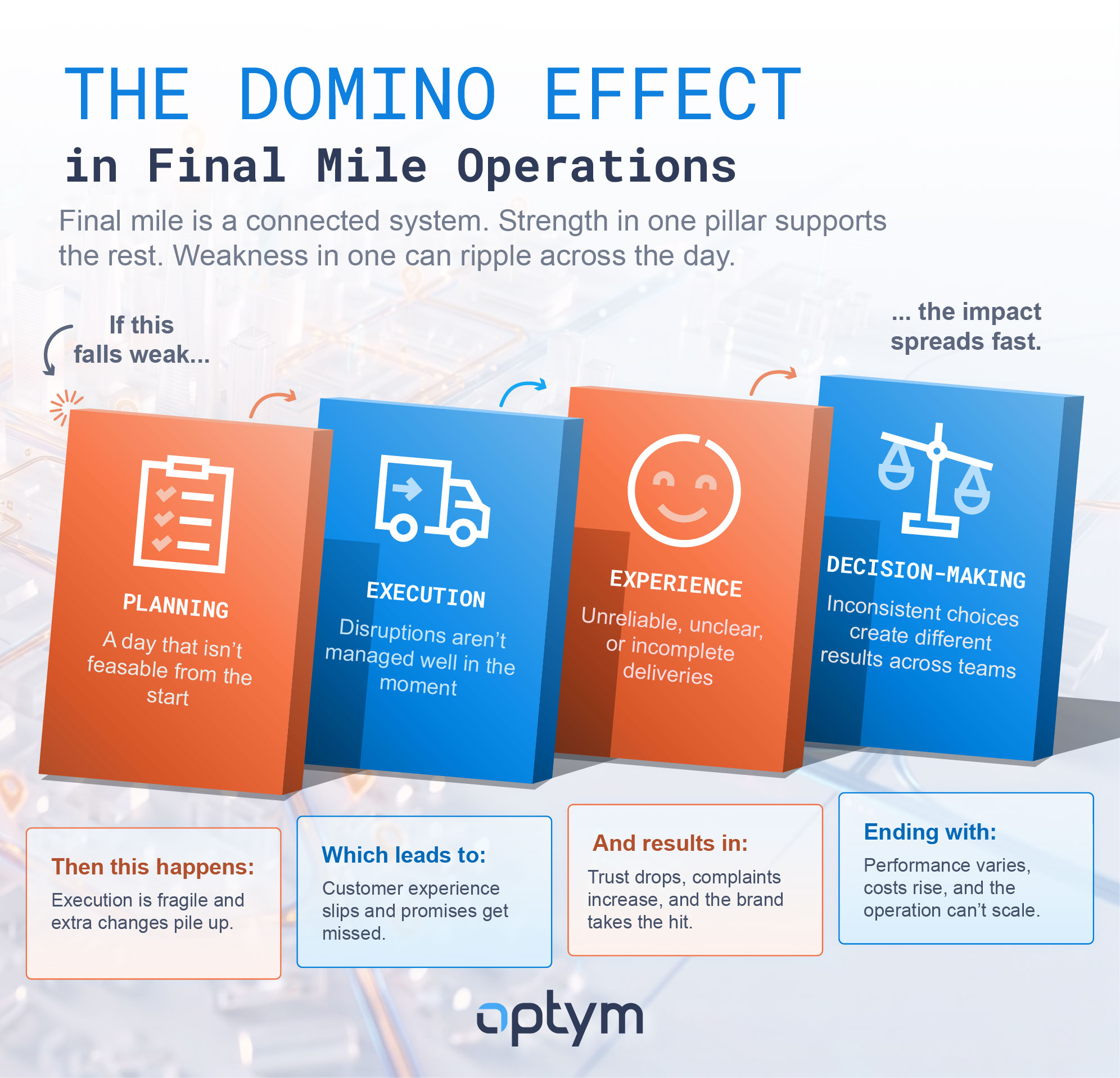
- Better planning makes execution more resilient.
- Better execution protects the customer experience.
- Better decision-making helps the operation adapt as conditions change.
That is why final mile performance is not just a routing problem. It is an operating system problem.
The best final mile networks are not just building efficient routes. They are building operations that can plan realistically, adapt quickly, deliver consistently, and make good decisions at scale.